The Global Rupture
Canada can no longer participate in the War on Drugs

The global shakedown by the US government has had a major impact on Canadians and how we view ourselves. During my lifetime, Americans have dominated the political landscape, the economy, and popular culture. It can also be said that Americans have dominated our health care system through medical research at the NIH (National Institutes of Health), public health policy at the CDC (Centres for Disease Control) and the approval of new medicines and devices at the FDA (Food and Drug Administration).
While Canadians take pride in our universal access to health care, we seldom deviate from the Americans in our medical policies and practices. This can no longer be the case. Over the past year we have seen a massive overhaul in American health institutions, including deep funding cuts to academic research, the dumbing down of professional leadership, and the rollout of health policies based on political opportunism and conspiracy theories. On the global stage, the American withdrawal from the World Health Organization (WHO) and the dissolving of the United States Agency for International Development (USAID) has created major shortfalls in funding, expertise, and influence. Canada can either become collateral damage or move forward with our own ideas and policies.
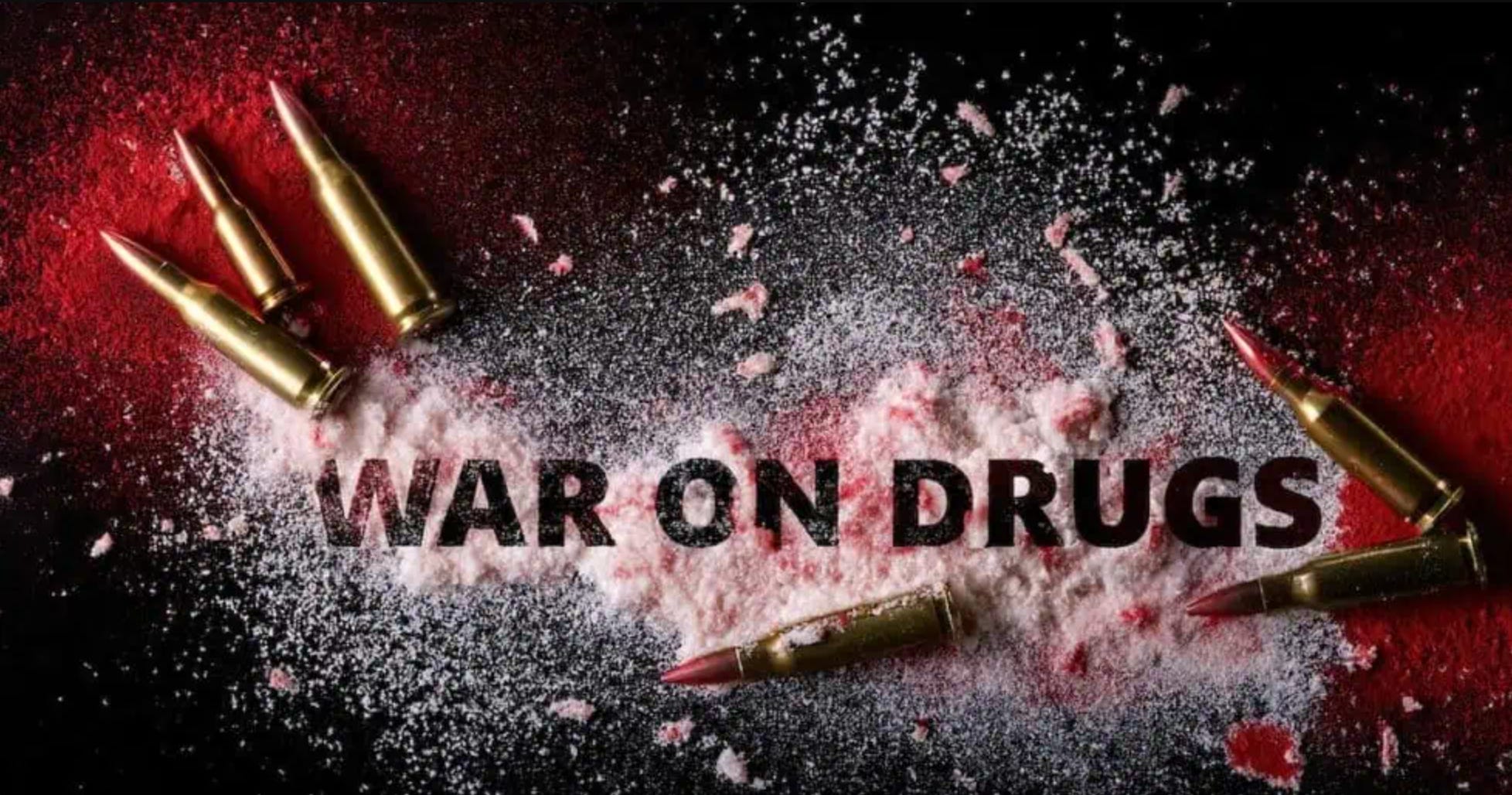
One of the most catastrophic American led public health policies has been the War on Drugs. This global prohibitionist agenda was first ushered onto the world stage in 1961 through the United Nations Single Convention of Narcotic Drugs. Signatories to this convention agreed to combat the “serious evil” posed by “addiction to narcotic drugs”. But the War on Drugs was supercharged by US President Richard Nixon in 1971 when he called drug abuse “public enemy number one” and set in motion decades of violence and death. The unbending embrace of prohibition and punishment as the first and only approach to drug use remains a consistent and destructive global force.
The War on Drugs has filled our communities with an underclass of people living in squalor, spending their days sourcing and selling illegal drugs, while dodging the criminal justice system. The most vulnerable people in our society have become reviled lawbreakers and have been left to the mercy of criminal gangs who produce and distribute increasingly potent and deadly drugs. In Canada, the War on Drugs has led to an estimated 50,000 deaths in the past decade from fentanyl poisoning alone. We have filled our prisons with non-violent drug offenders and support military style drug-busts to take down low level drug dealers. All the while the drugs keep flowing, law enforcement keeps growing, and more people keep dying.
The War on Drugs has also given rise to a global network of drug cartels that terrorize and destabilize entire countries. Mexico, Columbia, and other countries throughout Latin America have been particularly impacted with extreme violence and loss of life as cartels battle for control of the lucrative and insatiable North American drug market. According to the United Nations Office on Drugs and Crime, Columbia, Peru, and Boliva grow most of the world’s cocaine crop, Afghanistan supplies most of the world’s heroin, and labs in Mexico and Southeast Asia are the manufacturing centres for synthetic drugs like fentanyl and methamphetamine. To get these drugs to global markets, many other countries have become part of the distribution network bringing crime and violence to regions that don’t even have a market for these substances.
To support this, the American Drug Enforcement Agency (DEA) operates like an independent international police force. With an annual budget of over US$3 billion they have 87 foreign offices in 67 countries. While they work with their national counterparts, they are accountable only to the United States and act with impunity in host countries. They force other countries to adopt their prohibitionist policies which have implications far beyond illegal drugs. In 2022, President Gustavo Pedro of Columbia declared that the “war on drugs” had failed his country and did not want to pursue military attacks on drug cartels or the chemical eradication of coca plantations. The American’s consider this “dangerously permissive” and have threatened to “decertify” Columbia as an alley in the global fight against drugs. They would join Afghanistan, Myanmar, and Venezuela as other countries that have been decertified. The recent brazen abduction of Venezuelan President Nicolas Maduro shows how failure to comply can be used as pretext for politically motivated military interventions.
The War on Drugs has become so entrenched in society that most people equate drug use with law-enforcement and criminality. It is like a religion or a moral crusade to achieve a drug-free society. This fantasy drives us to extreme measures to wipe out the drug supply and eliminate demand. This singular focus on prohibition and abstinence-only policies severely limits interventions aimed at reducing the health and social impacts of drug use. Harm reduction interventions of any sort are simply not tolerated.
According to the War on Drugs narrative, harm reduction interventions are unnecessary. For example, why would we distribute clean needles to prevent HIV transmission when people shouldn’t be injecting drugs in the first place? Why would we prescribe methadone to treat heroin addiction when it is just another addictive drug? Why would we set up supervised injection sites when it makes drugs easier to use? Why would we give out naloxone to reverse drug overdoses when people shouldn’t be using these drugs in the first place? Why would we prescribe pharmaceutical-quality drugs in place of street drugs (safe supply) when people should just quit?
It doesn’t make any difference if these harm reduction interventions are proven to save lives or improve people’s well-being, because we are told that harm reduction doesn’t address the actual problem. The drugs. Those who do advocate for more pragmatic and empathetic approaches are considered radical and naïve. From a politician’s standpoint, supporting harm reduction is being “soft of drugs” which is political suicide.
Not every country has been entirely complicit with the War on Drugs. Portugal stands alone as a country that defied international norms and decriminalized all drugs in 1991. This has been extremely successful with greatly reduced drug related criminal charges, less violence, more people receiving addiction care and treatment, and less drug use. Other European countries including Germany, Switzerland, and Holland have implemented some harm reduction policies but have generally followed the prohibitionist script.
Canada has attempted some progressive harm reduction pilot projects over the years that represent a small crack in the “war on drugs”. These have mainly been centred in Vancouver which has historically been home to a disproportionate number of people using illegal drugs. In 1989, Vancouver opened the first needle exchange program to reduce HIV transmission. In 2003, Vancouver opened the first government sanctioned supervised injection site in North America in response to public drug use. In 2014, a small heroin prescription program was opened to reduce the reliance on street drugs. Beginning in 2017, Canada ran some opioid prescription programs in response to the epidemic of fentanyl poisoning. In 2023, the city of Vancouver ran a three-year pilot program to decriminalize the possession of small amounts of drugs. All these programs have been highly successful in making life safer and better for the people enrolled but have struggled to expand or gain national footing. In fact, there is currently aggressive opposition towards harm reduction programs in Canada falsely blaming these programs for making things worse.
The War on Drugs has led us to an absurd and morally bankrupt approach to drug use in our societies. We can no longer sit back and let people die off as we wait for a magical time when all drugs disappear. We can’t be part of a system that supports military interventions to fight the production and distribution of drugs. While Canada and the world cannot blame the Americans for all the drug-related death and destruction, it is the American led and financed War on Drugs that dictates global drug policy and blocks harm reduction efforts. As Canada is forced to re-imagine its relationship with the United States, it seems like an excellent opportunity to rupture our allegiance to the War on Drugs.
Mark. I would have been one to champion the war on drugs in 1980 when I became a pastor in an evangelical church. 46 years later I’ve learned that many political solutions to human issues can simply be distractions from solutions to the real problems. The policy then becomes the problem. Far too many safe injection sites have been shut down because of the narrative around abstinence as the only viable long term solution.
Agreed, harm reduction policies not only save lives, and help curbs some of the stigmatization. Pragmatic regulations help too. I was sad to hear that B.C. has cutback on some of the harm reduction programs they offered those who use street drugs. Sadly, the world seems to be going back to the “prohibition, abstinence only” agendas with heavy stigmatization. Such as Alberta’s forced rehab. But, right now, Alberta is not a place to be. They have agendas, agendas focused on cutbacks, and forced mandates, and many other things I loathe right now.